

Our work is entirely funded by private donations – we receive no money from government. Your money will help us continue funding research into vitiligo and supporting people affected by the condition.
Frequently Asked Questions
Red Wine and Vitiligo
Recent research has explored whether moderate red wine consumption might influence vitiligo risk, especially through genetic studies and large population data.
What the Genetic Studies Show
People with a genetic tendency toward moderate red wine intake showed a significantly lower risk of developing vitiligo in some analyses — up to a 72% reduction for higher predicted weekly intake.
This protective signal is thought to be linked to resveratrol and other polyphenols that may help reduce oxidative stress, a major factor in melanocyte damage and vitiligo biology.
The Bigger Picture from Recent Data
A large 2026 UK study involving more than 340,000 adults found that not all alcohol appears to affect health in the same way. Heavy drinking clearly increases health risks, but moderate wine consumption was associated with better outcomes compared with similar intake of beer, cider, or spirits.
Important Caveats
These findings are nuanced. The association becomes less clear when adjusting for factors such as diabetes, overall alcohol use, and depression.
Heavy or frequent drinking remains harmful and may worsen inflammation, sleep, anxiety, gut health, or skin symptoms in some people with vitiligo. Results vary significantly from person to person.
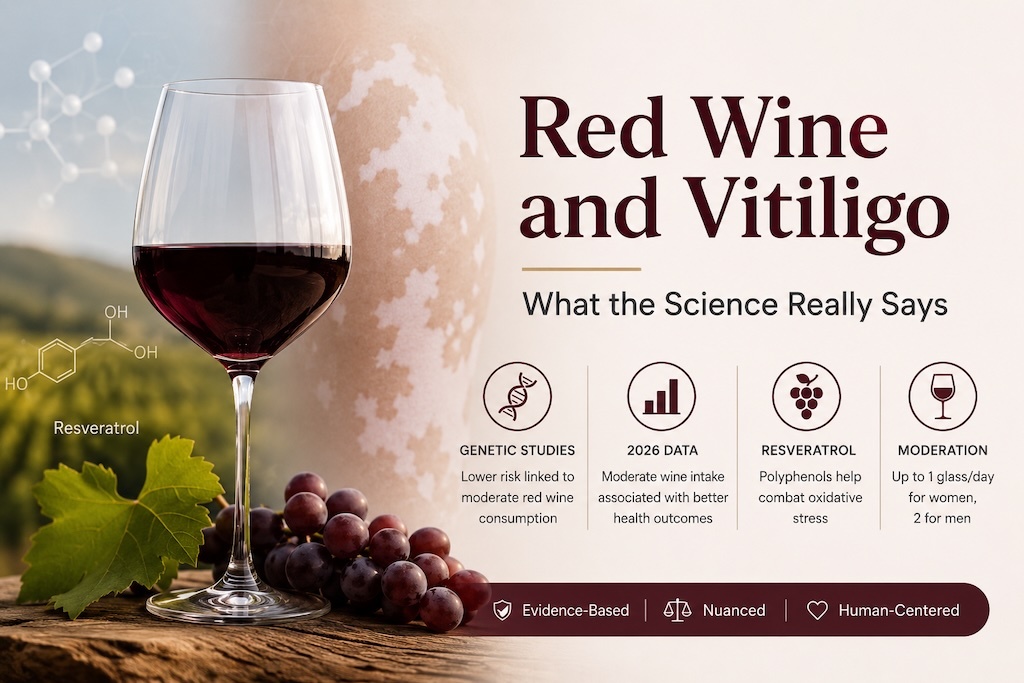
Moderation Matters
Common health guidelines define moderation as:
- up to one 5-ounce glass of wine per day for women
- up to two 5-ounce glasses per day for men
Ideally, this means with food, not as a hobby.
Non-drinkers should not start drinking for health reasons. If you have vitiligo, are undergoing treatment, take medication, or have other health concerns, speak with your doctor before making changes.
The Human Side
As Prof. Torello Lotti often reminded audiences — ending his talks with a slide on resveratrol and a good glass of red wine — health is not only about pills and lab values. It is also about food, rhythm, culture, joy, and how we actually live.
Suggested Further Reading
FAQOther Questions
- What is vitiligo?
Vitiligo (pronounced vit-ill-EYE-go) is a generally unpredictable skin disease that causes a gradual loss of skin color and overlying hair on different parts of the body. Contr...
- What are risks of oral and topical corticosteroids?
Corticosteroid drugs (like hydrocortisone, and others) are often used for treating vitiligo. By mimicing the effects of hormones your body produces naturally in your adrenal gla...
- Are there any famous people with vitiligo?
Many celebrities have dealt with vitiligo while remaining in the public eye, maintaining a positive outlook, and having a successful career. Here are a few courageous famous peo...
Though it is not always easy to treat vitiligo, there is much to be gained by clearly understanding the diagnosis, the future implications, treatment options and their outcomes.
Many people deal with vitiligo while remaining in the public eye, maintaining a positive outlook, and having a successful career.
Copyright (C) Bodolóczki JúliaBy taking a little time to fill in the anonymous questionnaire, you can help researchers better understand and fight vitiligo.