


How three lives — and one unexpected movement — changed the global story of vitiligo
In brief
Michael Jackson made the world search for vitiligo.
Lee Thomas made vitiligo speak — not as a textbook condition, but as a human experience.
World Vitiligo Day helped turn awareness into an organized global movement and boosted the conditions for drug development.
Winnie Harlow made vitiligo not only visible, but beautiful.
The next challenge is helping patients navigate what comes next — with better tools, better guidance, and, yes, a little help from AI.
If you had asked the average person about vitiligo in 1985, chances are they would have stared at you blankly. By 2026, that same person might recognize the condition from a supermodel, a television journalist, a Barbie doll, a fashion campaign, a social media feed, a video game avatar, or even a wax figure at Madame Tussauds.
That transformation did not happen because of a government program, a pharmaceutical company, or millions of people suddenly deciding to read dermatology journals. It happened because of stories. More specifically, because of three people.
One made the world curious. One made the world care. One made the world see beauty where many had been trained to see difference.
Together, Michael Jackson, Lee Thomas, and Winnie Harlow changed the trajectory of vitiligo awareness more than perhaps any scientific paper, advertising campaign, or medical conference ever could. But there is another twist to this story. Somewhere between a pop superstar, a television anchor, a fashion model, and a group of determined patients, a global movement emerged.
And nobody planned any of it.
The Strange Reality of Disease Awareness
Most diseases do not become widely known because of science. They become known because of stories.
Few people knew much about HIV before Magic Johnson disclosed his diagnosis. Few understood Parkinson's disease before Michael J. Fox became its most recognizable public face. People connect with people before they connect with data.
Medicine may explain a condition. Culture decides whether anyone pays attention. Vitiligo followed exactly the same path.
Before Michael Jackson: The Invisible Years
Today, a newly diagnosed patient can find millions of images, videos, articles, podcasts, support groups, and social media accounts within seconds. Forty years ago, that world did not exist.
Most people had never heard the word vitiligo. Many physicians outside dermatology rarely encountered it. Patients often felt completely alone. There were no online communities, Instagram accounts, YouTube channels, or awareness campaigns. If you had vitiligo, chances were good you had never met another person with it.
Then came the most famous entertainer on Earth.
Michael Jackson: The World's Most Reluctant Advocate
Michael Jackson never wanted to become the face of vitiligo. In many ways, he spent years trying not to.
As his pigmentation gradually disappeared during the 1980s, public fascination intensified. His changing appearance became one of the biggest celebrity stories on the planet. People speculated endlessly. Theories multiplied. Rumors became headlines.
Even after Jackson publicly disclosed that he had vitiligo, many people refused to believe him. Looking back, it was one of the strangest failures of public understanding in modern medicine: one of the most recognizable human beings on the planet was living with extensive vitiligo, yet the condition itself remained largely misunderstood.
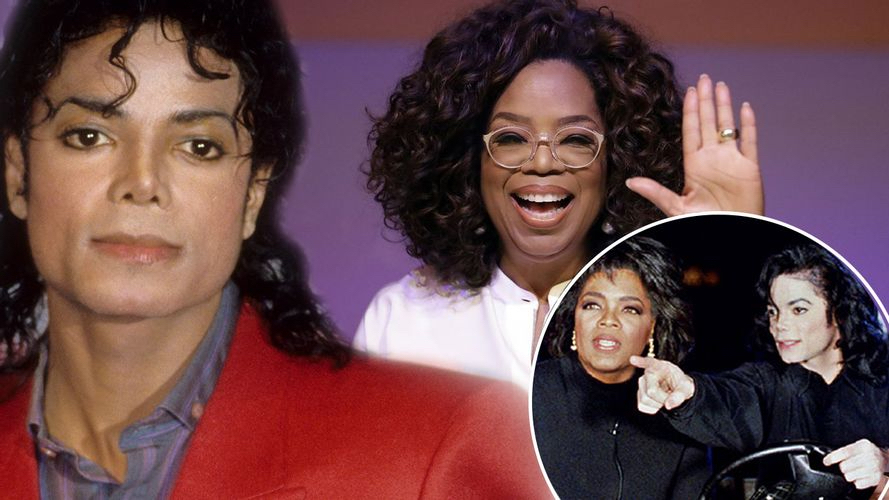
“I have a skin disorder that destroys the pigmentation of my skin. It's something I cannot help.”
— Michael Jackson, 1993 interview with Oprah Winfrey
Then came June 25, 2009. Michael Jackson passed away in Los Angeles, bringing an extraordinary and complicated life to an abrupt end at the age of 50.
Within hours, something remarkable happened. Millions of people who had never heard of vitiligo suddenly wanted answers. Google searches exploded. News outlets discussed the condition. Medical explanations appeared. People who had spent decades misunderstanding Jackson's skin began looking for facts.
The irony is difficult to ignore. The greatest awareness event in vitiligo history did not happen while Jackson was alive. It happened after he was gone. MJ spent decades trying to escape scrutiny of his skin. Instead, he became the single largest driver of vitiligo awareness the world had ever seen.
When Fans Became Advocates
Most celebrity stories end there. This one did not.
The internet searches eventually faded, but something else happened. People began asking a different question: what if this awareness could actually help someone?
The idea of a vitiligo awareness day had already been circulating long before World Vitiligo Day became a reality. Advocates such as Dr. Savita Maholtra, Barbara Summers, Steve Hargadon, Valarie Molyneaux, and others had spent years pushing for greater visibility, education, and public recognition.
At the same time, the patient community was beginning to organize in more personal ways. In 2007, Lee Thomas launched V-Strong, his vitiligo support group, alongside the release of his memoir Turning White. A year later, Ogo Maduewesi, a Nigerian patient advocate and Michael Jackson fan, attended one of Lee's early vitiligo events in 2008.
Then came one of those strange moments that historians struggle to explain and storytellers love. In 2011, Ogo launched a petition calling for June 25 to become a day dedicated to vitiligo awareness. By itself, the petition might have remained just another online campaign, – one of thousands on Petitions24 back then.
Instead, through timing, persistence, luck, providence — or perhaps a well-timed deus ex machina — it connected with Yan Valle and the Vitiligo Research Foundation.
That connection changed the scale of the idea. Through the Vitiligo Research Foundation, Professor Torello Lotti and Yan Valle helped build the operational backbone needed to transform a petition into a movement. It helped bring together several streams that had been running in parallel: Michael Jackson fans, patient advocates, support groups, physicians, and organizations already working to give vitiligo a stronger public voice.
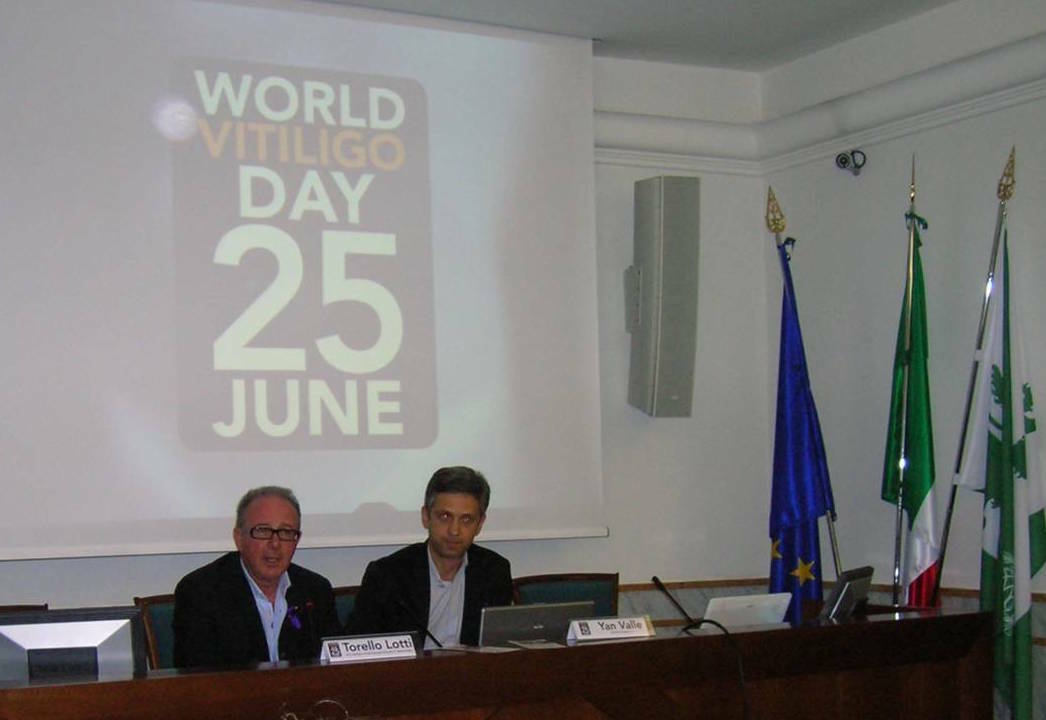
Not glamorous work. Mostly emails, deadlines, websites, sponsors, speakers, logistics, and the occasional small diplomatic fire. In other words, the sort of work that actually keeps a global movement alive.
What emerged was something unusual. Unlike many awareness campaigns launched by governments or corporations, World Vitiligo Day grew from the bottom up. Patients started it. Volunteers sustained it. A global community carried it forward.
And today it stands as one of the largest healthcare awareness events in the world.
Lee Thomas: Giving Vitiligo a Human Voice
While the world was trying to understand Michael Jackson, an Emmy Award-winning television journalist named Lee Thomas was fighting a quieter battle. His story contains an important detail that is easy to overlook today.
Lee's childhood dream was television. At the age of 25, when his dermatologist explained that vitiligo had no cure, he immediately understood the threat. In an industry built around appearance, his changing skin felt like a career-ending diagnosis. For years that followed, he relied on heavy makeup before every broadcast. The goal was simple: look normal, blend in, avoid questions, avoid stares, avoid becoming the story.
Eventually, that became impossible. As the depigmentation spread to his hands, Thomas informed his colleagues and station management. Expecting sympathy at best and dismissal at worst, he received an unexpected response.
They asked him to tell the story on air. In November 2005, Thomas appeared on television without the makeup. The station was flooded with responses. Some were cruel. Most were curious. Many were supportive.
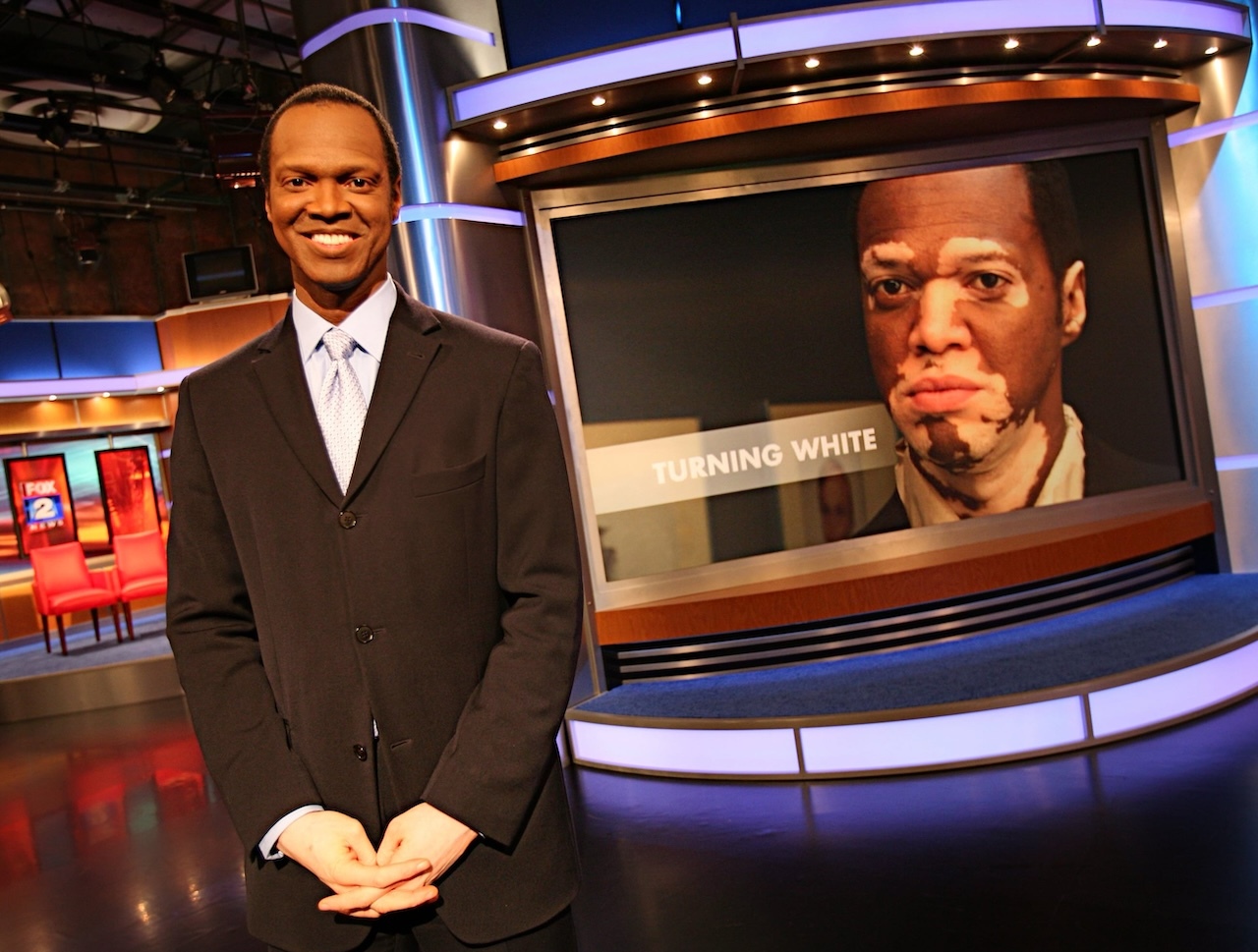
In 2007, Lee published his memoir, Turning White. And with the release of the book, he started V-Strong, a support group that became an important early space for patients to meet, talk, and realize they were not carrying this alone.
“I started to let this disease turn me into something that I was not.”
— Lee Thomas
Where Michael Jackson sparked curiosity, Lee Thomas sparked empathy. People suddenly saw not a superstar, but a colleague, a professional, a husband, a father. Someone who experienced the same fears, insecurities, frustrations, and triumphs they might experience themselves.
His work also changed the conversation inside medicine. When Lee spoke to doctors in countries such as Russia and Italy, many heard something they had rarely heard before: the emotional side of vitiligo described directly by a patient, in plain human language, without the protective wrapping of clinical terminology.
That mattered. It helped open the door to a more patient-driven global network, where people living with vitiligo were no longer just subjects of medical observation. They became connectors between doctors, researchers, support groups, and families.
If Michael Jackson made the world search for the word, Lee Thomas made vitiligo speak.
For anyone who wants to hear that voice directly, Lee's TED-style talk remains one of the clearest examples of how personal testimony can change a medical conversation.
From Awareness to Community
The media landscape was evolving too. The Jackson era belonged to television, newspapers, and celebrity gossip. The Thomas era belonged to communities. Support groups expanded. Forums emerged. Patients found each other online.
The conversation slowly shifted from “What is vitiligo?” to “How do people actually live with it?”
That distinction changed everything.
Winnie Harlow: Making Vitiligo Beautiful
Then social media arrived, and the entire visual landscape changed. Instagram became the new magazine. Influencers became the new celebrities. Visibility itself became a form of power.
Into this world stepped Winnie Harlow.
Unlike Michael Jackson, she never tried to hide her skin. Unlike Lee Thomas, she did not spend most of her time explaining it. She simply existed publicly and unapologetically.
When she appeared on America's Next Top Model in 2014, millions of people saw something they had rarely seen before: a successful, confident, beautiful woman whose vitiligo was impossible to miss and impossible to ignore.
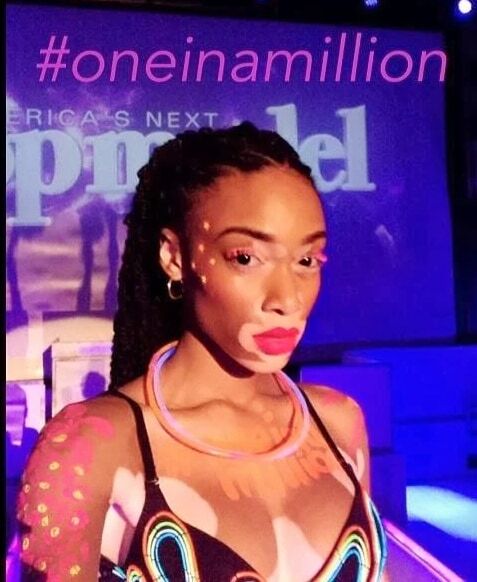
But Winnie did something even bigger than visibility: she made vitiligo beautiful. That may sound simple now. It was not simple then.
For generations, vitiligo had been framed as something to hide, cover, correct, explain, or medically manage. Winnie walked into the highest levels of fashion and beauty without asking permission to belong there. She appeared at major premieres, worked with global brands, dated superstar athletes, and turned her skin into part of her visual power rather than something to erase.
Even her makeup sent a different message. It was not used to cover vitiligo. Sometimes it accented and framed it. It made the contrast part of the aesthetic. That was a cultural earthquake wrapped in couture.
For the first time, anyone with vitiligo could open social media and immediately find people who looked like them. That may sound ordinary today. Ten years ago, it was revolutionary. An entire generation had grown up without a mirror. Now they had thousands.
When Visibility Became Mainstream
The fashion industry deserves little credit for moral enlightenment. It deserves considerable credit for recognizing cultural momentum.
As attitudes shifted, brands began featuring models with vitiligo in campaigns. Magazines changed. Beauty advertising changed. Toys changed. Even video games — not exactly famous for moving fast on subtle human nuance — began catching up.
By 2020, vitiligo-inclusive Barbie dolls appeared on store shelves. Soon, players could create avatars with vitiligo in games like The Sims 4, Disney Dreamlight Valley, Forza Horizon 5, and Street Fighter 6. Representation had moved from exception to expectation.
The condition was no longer hidden. It had become visible. And, in the hands of people like Winnie Harlow, it became beautiful. It also became part of a much wider creative uprising.
The Effect Comes Full Circle
Then came another symbolic moment. In 2025, just before World Vitiligo Day, Winnie Harlow's wax figure was unveiled at Madame Tussauds New York.
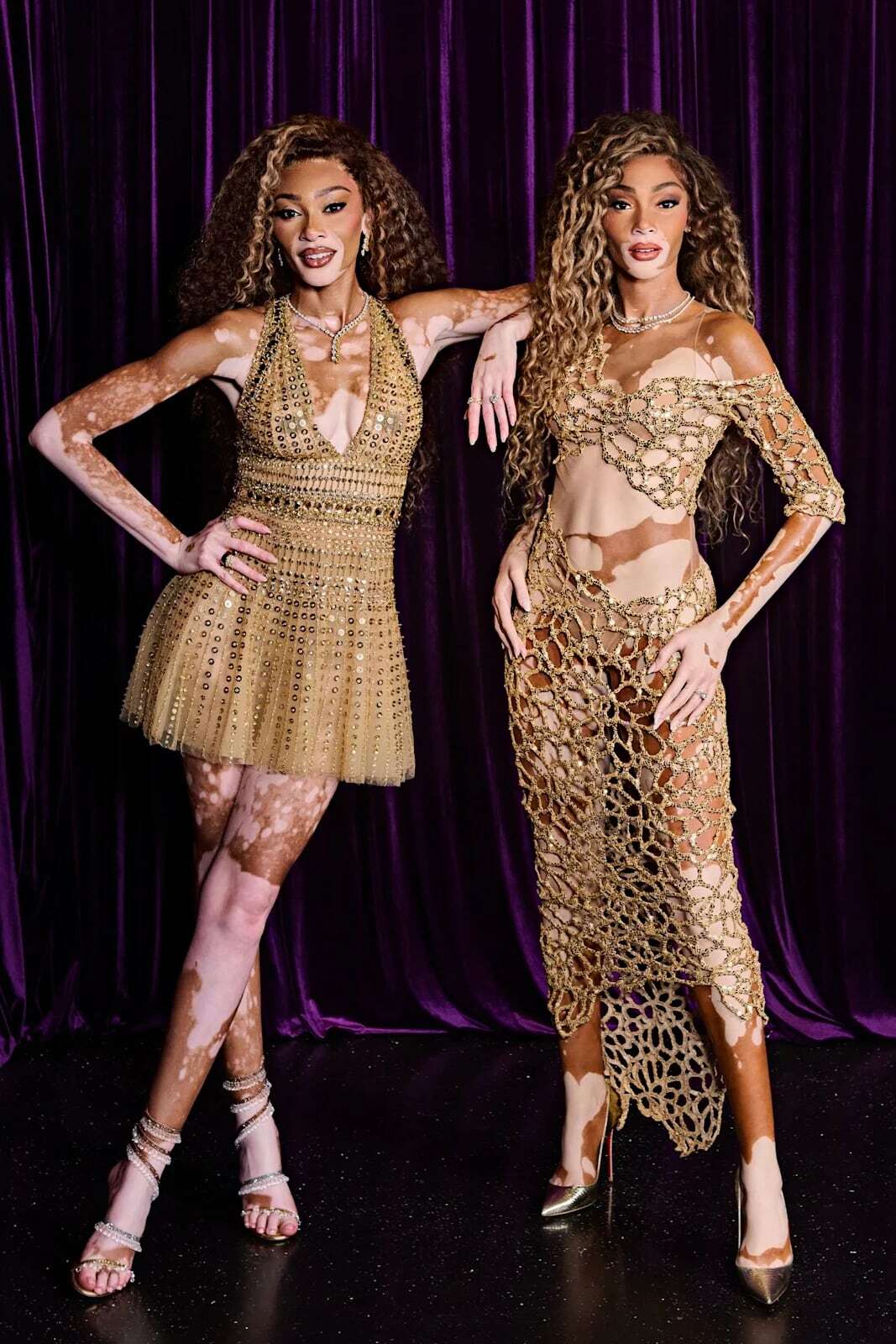
Think about that for a moment. A condition that once generated rumors, confusion, and ridicule now stood in one of the world's most famous museums. Not hidden. Not explained away. Not apologized for. Simply present.
That same year, Lee Thomas took the stage at World Vitiligo Day headquarters in Toronto. The man who helped humanize the condition was now helping guide a global conversation about it.
And the story continues. In June 2026, Winnie Harlow is publishing Simply Winnie, a children's book inspired by her own experiences growing up with vitiligo. Meanwhile, Lee Thomas will travel halfway around the world from Detroit to Chandigarh, India, serving as a lead moderator and speaker at World Vitiligo Day 2026 under the theme “From Stigma to Strength.”
The movement keeps moving. The story keeps growing.
The Evolution of Awareness
Looking back, the pattern is clear enough without turning it into a museum plaque: Michael Jackson made vitiligo searchable, World Vitiligo Day made it organized, Lee Thomas made it human, and Winnie Harlow made it visible in a new cultural language.
Each stage built upon the previous one.
Without awareness, there is no movement. Without movement, there is no community. Without community, there is no recognition. Without recognition, meaningful action becomes difficult.
The Fourth Phase: AI-Assisted Navigation
Today, we face a different challenge. The problem is no longer awareness. The problem is overload.
A newly diagnosed patient can find thousands of photos, videos, articles, influencers, support groups, podcasts, treatment claims, miracle cures, and conflicting opinions within minutes. Information is abundant. Wisdom is not.
The next chapter of vitiligo advocacy may be less about visibility and more about navigation: helping patients find trustworthy information, helping families find support, helping people distinguish hope from hype, and helping them understand not only what vitiligo is, but what comes next.
The clearest expression of that shift is the Vitiligo Patient Journey Map: a practical effort to help patients understand where they are, what questions to ask, which options may be relevant, and when professional care becomes important.
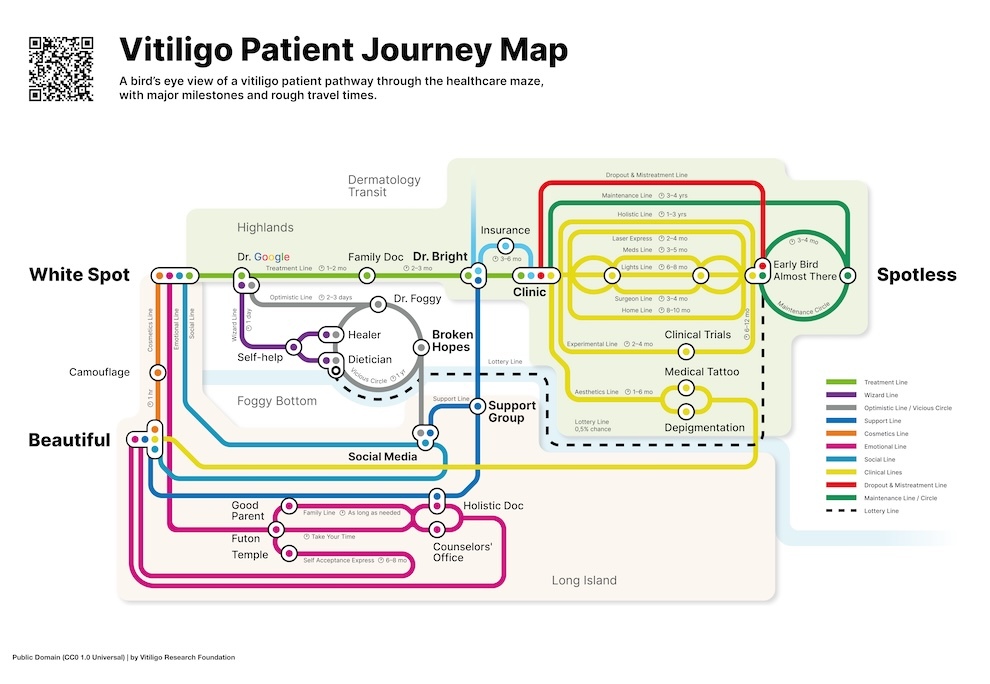
And now, inevitably, AI enters the story. Not as a miracle machine. Not as “Dr. Robot will see you now,” thank God. But as a tool that can help organize the chaos: pattern recognition, treatment education, clinical trial awareness, camouflage guidance, and plain-language explanations for people who are tired, overwhelmed, and still Googling at 1:00 a.m.
In that sense, AI-powered patient navigation is not a break from the Jackson–Thomas–Harlow story. The Vitiligo Patient Journey Map asks the next, more practical question:
“Now that I know what this is, what do I do next?”
From Question to Movement to Beauty
None of the people in this story set out to create a global awareness movement. Yet together they changed the way the world sees vitiligo.
Michael Jackson transformed vitiligo into a question. His fans helped transform awareness into activism. Lee Thomas transformed the condition into a conversation. Winnie Harlow transformed it into beauty.
And thousands of patients, physicians, volunteers, researchers, and advocates transformed that momentum into a worldwide movement.
Representation changed perception. Perception changed demand. Demand changed investment. World Vitiligo Day did not develop the drugs, but it helped create the world in which developing them finally made sense.
Somewhere along the way, millions of people living with vitiligo became a little less invisible. And that may be the most important effect of all.
Written by Yan Valle, polished with ChatGPT — one more small sign that even advocacy has entered its cyborg era.
Published on June 1, 2026
In Brief
- Michael Jackson's death in 2009 triggered the largest recorded surge in global internet searches for vitiligo, making the condition widely known.
- Lee Thomas helped humanize vitiligo by openly sharing the emotional and psychological realities of living with the condition, and by helping doctors hear the patient side directly.
- V-Strong, early patient advocates, Michael Jackson fans, and global groups helped create the human infrastructure that eventually shaped World Vitiligo Day.
- Winnie Harlow transformed vitiligo into a visible and beautiful part of mainstream culture through fashion, media, red carpets, and social platforms.
- Public understanding evolved through five stages: Awareness → Activism → Empathy → Beauty & Recognition → AI-Navigation.
- The next challenge for the vitiligo community is not simply visibility, but helping patients find trustworthy information, effective care, realistic expectations, and meaningful support.
- The story continues today through World Vitiligo Day, patient communities, educational platforms, and a new generation of advocates carrying the message forward.
Suggested Reading
Michael Jackson Fans and World Vitiligo Day Petition
A closer look at how Michael Jackson's fans helped turn awareness into activism — and how June 25 became tied to the global vitiligo movement.
What the MJ Biopic Got Right (and Wrong) About Vitiligo
A practical review of how Michael Jackson's vitiligo is portrayed on screen, where the story works, and where medical nuance gets lost because Hollywood loves shortcuts. Shocking, we know.
What's the Status with Official Recognition of World Vitiligo Day?
A clear explanation of where World Vitiligo Day stands today, what “official recognition” really means, and why global health advocacy is usually a marathon wearing bureaucratic shoes.
Listen to Deep Dive in Vitiligo
World Vitiligo Day Goes Supersonic in Purple (Ep. 39)
A lively look at how World Vitiligo Day turned visibility into momentum, with purple energy, global reach, and the occasional logistical miracle.
How World Vitiligo Day Reached 60+ Million People in 24 Hours (Ep. 38)
A behind-the-scenes discussion of how the campaign reached a massive audience in a single day — proof that awareness can still surprise us when the machinery works.
World Vitiligo Day: Redefining the Future of Dermatology (Ep. 36)
A broader conversation on why World Vitiligo Day is no longer just an awareness date, but a platform for patient voice, dermatology, research, and future care models.
Stay connected
For more practical, human, and science-aware updates on vitiligo, follow the Vitiligo Research Foundation and explore our latest articles, podcasts, newsletter, and World Vitiligo Day updates.