New

Vitiligo Study For Children Ages 2–11 in USA and Canada
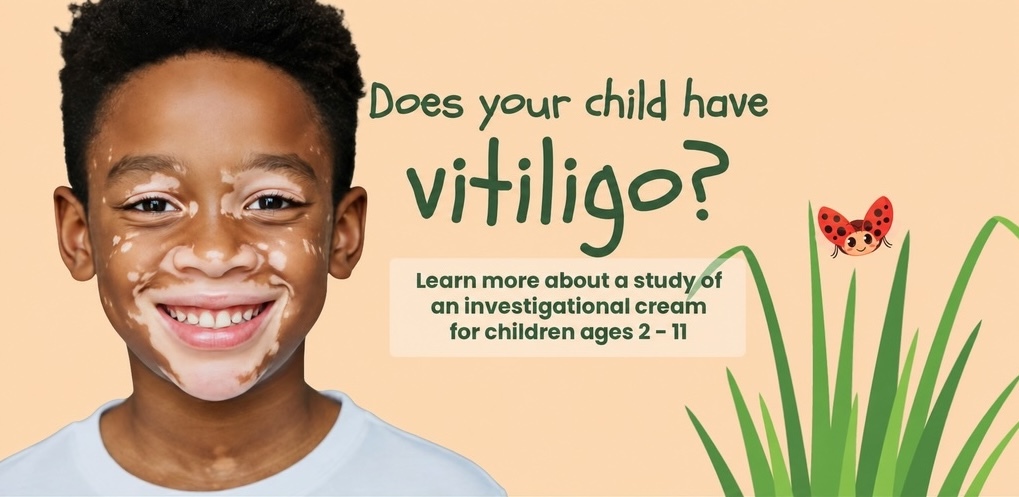
Clinical trial · Children ages 2–11 · United States and Canada
TRuE-ViP study is testing ruxolitinib cream in children ages 2–11 with vitiligo in the United States and Canada. Its use in children this age is investigational — researchers are still finding out how well it works and how safe it is.
Here is what a parent needs to know before adding a clinical trial to the family calendar.
Is there a study site near you?
TRuE-ViP has participating study sites in the United States and Canada. Locations and recruitment status can change, so check the current map before making plans.
Find locations on the map →Why study the cream in younger children?
Ruxolitinib cream — marketed as Opzelura in the United States and Canada for nonsegmental vitiligo from age 12 — has not been established for this younger age group. This study is designed to evaluate its efficacy and safety in children ages 2–11.
A younger child is not a pocket-sized teenager. Researchers need real evidence from this age group. The answer is not known yet — that is why the trial exists.
Who may qualify?
- Children ages 2 to 11 at the study start
- A diagnosis of nonsegmental vitiligo, its most common form
- Vitiligo sized from a few spots up to 10% of the body
Detailed criteria may include other health and treatment requirements. Contact the study team for details.
Ready to check the basics?
Answer a few initial questions and choose your country. A participating study site will confirm whether screening makes sense.
Check eligibility →Quick answers for parents
The questions mothers ask first
You do not need to decode a research protocol over breakfast. Start with the question sitting at the top of your list.
FAQ 1 · The basics
Why does age matter — and who can join?
Learn why children are studied in separate age groups, how a trial differs from regular treatment and why location matters.
Read the basics →FAQ 2 · Taking part
What does joining actually look like?
Cream in the morning. Cream at night. Scheduled visits, photographs and blood tests. For the first 24 weeks, your child may receive ruxolitinib cream or a look-alike cream without the active medicine.
See what joining involves →FAQ 3 · Safety and choice
Who watches my child — and can we leave?
See who monitors safety, why other vitiligo treatments may need to pause and what happens if the trial no longer feels right for your child or your family.
Read about safety and leaving →Interested in this vitiligo study?
Visit the official TRuE-ViP website for the full study details, current locations, and to check the basic eligibility criteria.
Visit the TRuE-ViP study website →Recruitment status and site availability can change. The research team will confirm eligibility and explain the study before enrollment.
Keep reading
Suggested Reading
Clinical trials are one part of a much bigger story. Here are a few useful reads on treatment, family life and where vitiligo research is heading.
Clinical trials
Clinical Trials: An Important Step in Drug Development
How treatments move from the laboratory into human studies — and what each phase is meant to learn.
The bigger question
Why Is There No Cure for Vitiligo?
We have better treatments, better science and more clinical trials than ever. So why are we still managing vitiligo rather than curing it? A look at the science — and the system around it.
Family planning
Pregnancy and Vitiligo
What we know about vitiligo before, during and after pregnancy — including treatment, thyroid health, postpartum changes and the chances of passing vitiligo to a child.
Patient journey
Vitiligo Patient Journey Map
Diagnosis, treatment, setbacks and daily life, mapped like a subway system.
Prefer listening?
🎙 Listen to Deep Dive in Vitiligo
Put the phone in your pocket and take the longer version with you. These episodes cover clinical trials, the search for a cure, and one decidedly low-tech treatment for making vitiligo easier to talk about with kids: a good book.
Podcast · Ep. 25
Inside Vitiligo Clinical Trials: Why, What and How? (Ep. 25)
A practical conversation about why clinical trials exist, how they work and what participation can mean for patients and families.
Podcast · Ep. 80
Why There Is Still No Cure for Vitiligo (Ep. 80)
Better drugs have changed vitiligo treatment. A cure is a harder problem. We look at the biology, the research system and why keeping pigment back may be harder than getting it back.
Podcast · Ep. 73
The Prescription You Won’t Find in a Pharmacy: Vitiligo Books for Kids (Ep. 73)
Sometimes the first thing a child needs is not another cream or another serious conversation. It is a story that makes vitiligo a little less strange — and gives parents better words for talking about it.
FAQOther Questions
- Which skin conditions can be mistaken for vitiligo?
Vitiligo is a common skin condition with characteristic milky white patches of irregular shape. However, several other skin conditions exhibit similar symptoms that can lead to ...
- What are risks of oral and topical corticosteroids?
Corticosteroid drugs (like hydrocortisone, and others) are often used for treating vitiligo. By mimicing the effects of hormones your body produces naturally in your adrenal gla...
- How Vitiligo Changes with Age?
Vitiligo, a condition characterized by the loss of skin pigmentation, can affect individuals at any stage of life. While it often appears before the age of 20, its progression a...
Though it is not always easy to treat vitiligo, there is much to be gained by clearly understanding the diagnosis, the future implications, treatment options and their outcomes.
Many people deal with vitiligo while remaining in the public eye, maintaining a positive outlook, and having a successful career.
Copyright (C) Bodolóczki JúliaBy taking a little time to fill in the anonymous questionnaire, you can help researchers better understand and fight vitiligo.