

New

Michael Biopic “Michael” Premieres April 24: Why This Matters for Vitiligo
The much-anticipated biographical drama Michael hits theaters and IMAX on April 24, 2026, following its world premiere in Berlin on April 10. Directed by Antoine Fuqua and starring Jaafar Jackson, the film offers a sweeping look at Michael Jackson’s life — from his Jackson 5 childhood to global superstardom, iconic performances, and deeply personal struggles.

Michael Jackson and Vitiligo: The Real Story
Michael Jackson lived with vitiligo, an autoimmune condition that causes loss of skin pigmentation. He spoke publicly and truthfully about it in his 1993 Oprah Winfrey interview, explaining how he used makeup as the condition progressed and later underwent depigmentation therapy to achieve a uniform appearance.
The condition was real. The narrative wasn’t.
For years, much of the media ignored the medical reality and replaced it with speculation — fueling myths that he was “trying to be white” or bleaching his skin. Those distortions caused lasting stigma, not just for Michael, but for millions living with vitiligo today.
Early viewers at the Berlin premiere have already noted visible vitiligo patches on Jaafar Jackson’s face in key scenes, suggesting the filmmakers are portraying this part of MJ’s story with unusual care. If that holds, it marks a long-overdue shift toward accuracy.
VRF’s Connection to MJ’s Legacy
At the Vitiligo Research Foundation (VRF), we’ve long recognized Michael Jackson as a powerful, if reluctant, figure in vitiligo awareness.
The origin story is less known.
In 2011, Ogo Maduewesi launched the first “Vitiligo Purple Fun Day,” choosing June 25 — the anniversary of Michael’s passing — and purple as the campaign’s unofficial symbol. When VRF later transformed this into a coordinated global movement, both the date and symbolism stayed.
Then something unexpected happened.
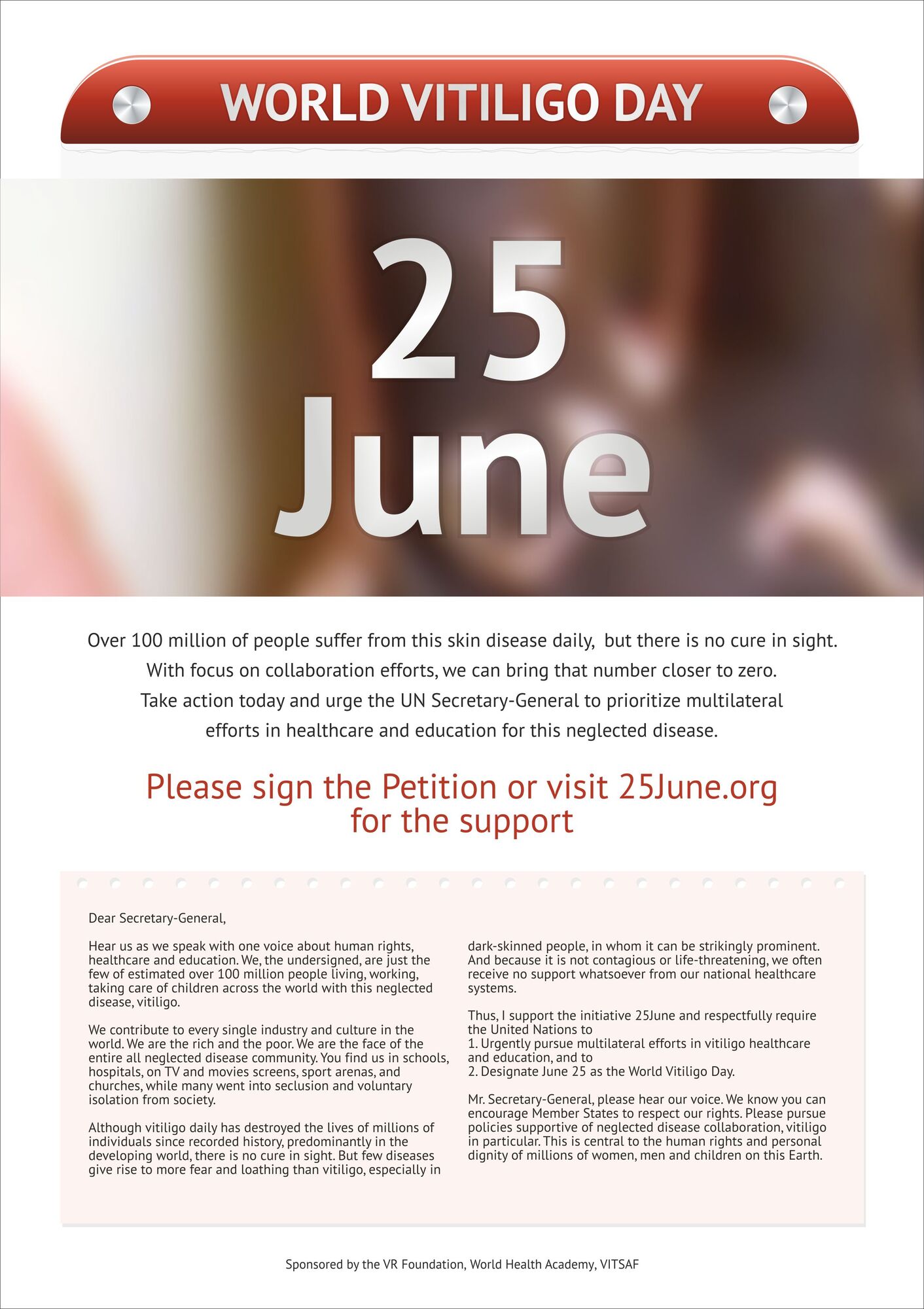
When VRF launched the formal UN-recognition campaign on 25June (now worldvitiligoday.org), Michael Jackson’s dedicated fans became one of its most powerful engines. In less than a year, they helped drive nearly 270,000 signatures — often leaving messages like “Heal the World” and “Let’s do this for Michael” along with it.
That’s not just fandom. That’s how movements start.
This surge turned a stalling petition into a juggernaut that surpassed 500,000 signatures by July 2015, eventually helping the VRF earn Special Consultative Status at the United Nations and put World Vitiligo Day on the UN calendar — turning a grassroots effort into a global advocacy movement.
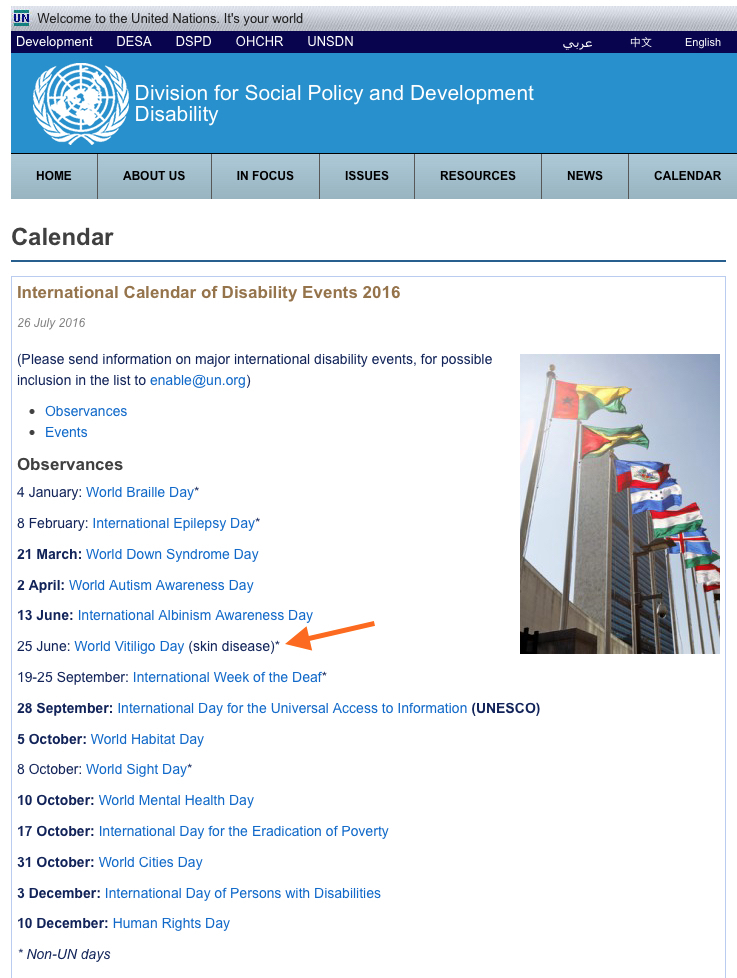
World Vitiligo Day on June 25 now reflects that history — and the nearly 100 million people living with vitiligo worldwide.
A Moment to Correct the Record
Representation matters, but accuracy matters more. If Michael portrays vitiligo truthfully, it won’t just be a win for cinema — it will be a small milestone for public health.
The story didn’t end in 1993. It took the world more than 30 years to finally catch up.
It’s a chance to correct the record. To replace myth with medical fact. And to recognize the very real human story behind the headlines.

by Yan Valle
Prof. h.c., CEO VRF
Suggested reading
- 📌 History Of The World Vitiligo Day
- Vitiligo — A Global Creative Uprising
- The Power of Advocacy: 2026 Leaders Summit
- What's the status with official recognition of World Vitiligo Day?
Listen to Deep Dive in Vitiligo podcast
- World Vitiligo Day Goes Supersonic in Purple (Ep. 39)
- How World Vitiligo Day Reached 60+ Million People in 24 Hours (Ep. 38)
- World Vitiligo Day: Redefining the Future of Dermatology (Ep. 36)

FAQOther Questions
- Does halo nevi affect vitiligo development?
Halo nevi (also known as Sutton's nevi) are characterized by a mole that's surrounded by a ring of depigmented or lighter skin. While both halo nevi and vitiligo involve the des...
- Is vitiligo contagious?
Vitiligo is not contagious. This means it cannot be spread from person to person through physical contact, sharing personal items, or any other means of transmission. Vitiligo i...
- I have vitiligo: will my children have vitiligo, too?
If you have vitiligo, it’s natural to worry about your children. While there is a genetic component, vitiligo is not a straightforward hereditary disease like eye color or heigh...
Though it is not always easy to treat vitiligo, there is much to be gained by clearly understanding the diagnosis, the future implications, treatment options and their outcomes.
Many people deal with vitiligo while remaining in the public eye, maintaining a positive outlook, and having a successful career.
Copyright (C) Bodolóczki JúliaBy taking a little time to fill in the anonymous questionnaire, you can help researchers better understand and fight vitiligo.